
Abstract
Spotify’s digital strategy was critically examined, focusing on trends, business models, collaborative connections, and AI. It investigated how Spotify leverages these attributes to keep ahead of the streaming music competitors and discover ways to improve.
Spotify’s freemium model, data-driven decision-making, and platform economy efforts helped it acquire and keep subscribers and generate revenue. Spotify used customisation and accessibility to satisfy the requirements of its diverse global audience and the burgeoning sustainability and inclusion movement.
Marketplace and subscription models, two digital business techniques that have transformed the game, were examined in relation to cybersecurity and ethics at Spotify. Findings showed Spotify’s ability to mitigate risks by obeying data protection rules and being transparent. These models were strengthened by finding ways to diversify commodities and enhance artist remuneration.
Strategic partnerships and collaborations drove Spotify’s rapid growth. Spotify partnered with telecoms, smart device, and content providers to raise exposure and client base. Cultural misalignments and partner dependence were identified as concerns.
Finally, it examined Spotify’s AI applications, which demonstrated how AI provided personalised suggestions, predictive analytics retained users, and enhanced voice recognition. Although these technologies provide Spotify an edge over its rivals, ethical and privacy concerns were raised, emphasising the necessity for strict control.
The research showed Spotify’s strategic adaptability and innovation in shifting digital environments. Spotify can stay ahead in the ever-changing digital world by fixing its faults and strengthening its approach.
Table of Contents
Abstract
1. Introduction
2. Overview of Key Trends and Advantages
2.1 Impact of Digital/Virtual Business
2.2 Three Major Trends in Business, Technology, and Society
2.2.1 Business Trends
2.2.2 Technological Trends
2.2.3 Societal Trends
2.3 Application of Trends to Spotify
3. Evaluation of Emerging Digital Business Models
3.1 Emerging Digital Business Models
3.2 Discussion on Key Issues: Cybersecurity and Ethics
3.3 Spotify’s Use of Emerging Business Models
4. Impact of Collaborative Relationships and Strategic Alliances
4.1 Collaborative Relationships and Strategic Alliances
4.2 Advantages and Disadvantages of Digital Alliances
4.3 Application to Spotify
5. Impact of Artificial Intelligence (AI) on Business
5.1 General Impacts of AI on Businesses
5.2 Applications of AI Relevant to Spotify
6. Conclusion
References
1. Introduction
Stockholm-based Spotify Technology S.A. is a leading online music streaming service. Spotify’s 2006 subscription model provided users access to millions of songs, podcasts, and audiobooks at any time, changing the music industry (Sun and Sun, 2019). Spotify has more clients than any other music streaming service, with 640 million active users per month and 252 million premium subscribers across 184 regions (Statista, 2024). The platform offers customised music recommendations and experiences using data analytics, AI, and ML. Spotify has worked with prominent record labels, content providers, and advertisers to create a system that fits everyone’s demands (Skog et al., 2021).
Internet usage, shifting customer behaviours, and technological advances have driven significant growth in the digital business environment during the last decade. Statista (2024) forecasts a 13.1% CAGR for the global digital business market from around $10 trillion between 2023 and 2030. This growth is driven by European businesses like Spotify, who are leading the digital-first revolution. Digital platforms dominate retail, entertainment, and finance, showing how technology may affect economies worldwide (Vonderau, 2019). Due to mobile devices and new marketplaces, companies may now reach clients worldwide.
New business models and trends like customisation, freemium services, and user-centric design have helped them achieve this. The company’s seamless integration of content development, distribution, and consumption reflects digital business trends. AI-driven music recommendation services like Discover Weekly and Release Radar are being used to boost user engagement and promote the growth. Beyond entertainment, Spotify has a big influence. It boosts the global economy by empowering artists and fostering music and commercial innovation. This report evaluates Spotify’s digital strategies and emerging trends.
2. Overview of Key Trends and Advantages
2.1 Impact of Digital/Virtual Business
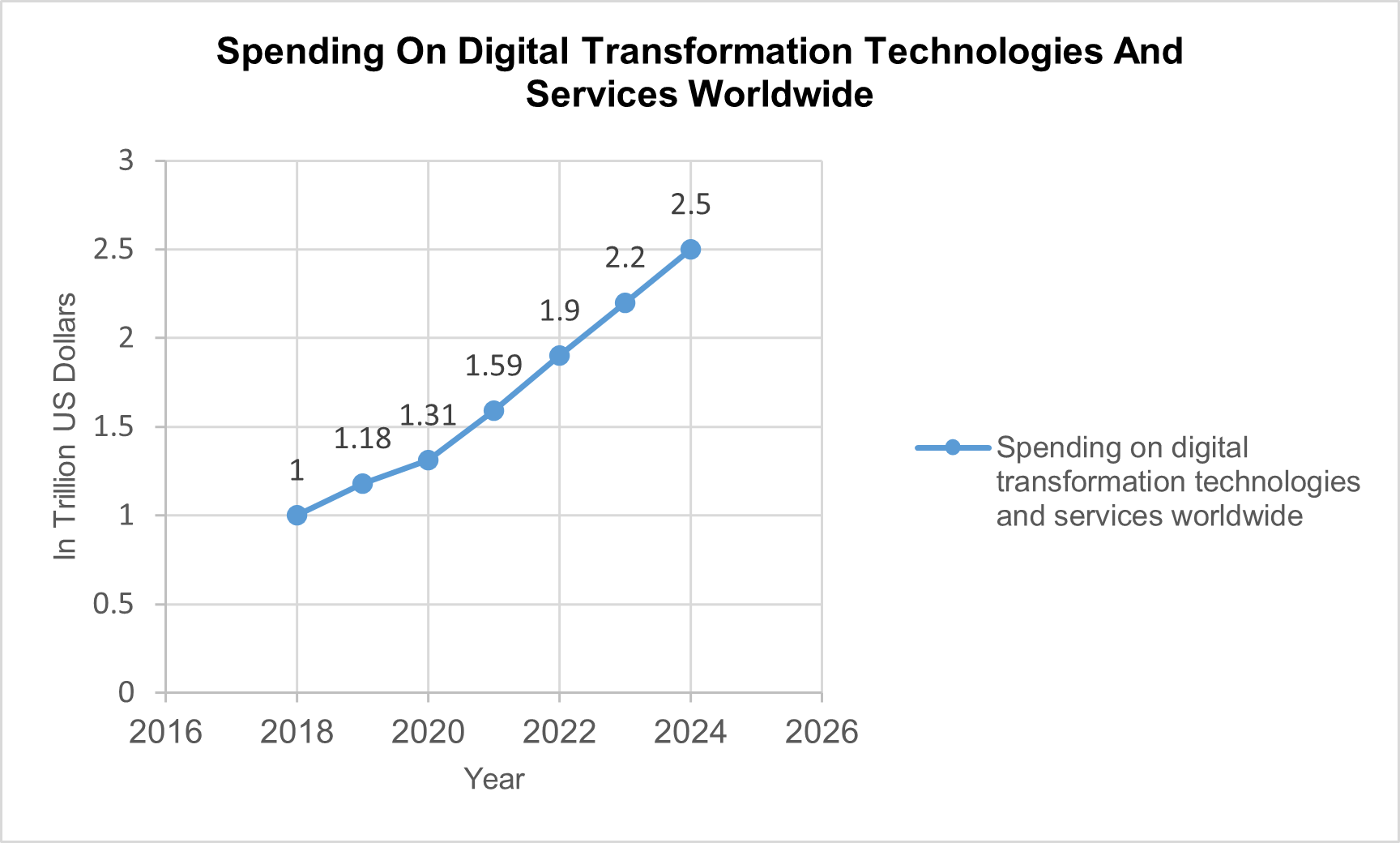
Figure 1 Spending On Digital Transformation Technologies And Services Worldwide
Source: Statista (2024)
Figure 1 illustrates the consistent rise in global spending on digital transformation technologies and services, from $1 trillion in 2018 to a projected $2.5 trillion by 2025 (Statista (2024). This reflects the growing importance of digital business in driving innovation, efficiency, and scalability, underscoring its impact on global economic strategies.
Positive Impacts
Global Reach and Scalability: Digital and virtual firms provide global operations with reduced infrastructure expenses. Network Effect Theory explains how platforms like Spotify gain value as user bases grow (Eriksson et al., 2019). Scalability allows companies to swiftly develop and access customers that were previously unavailable due to geography, increasing profitability (Sun and Sun, 2019).
Personalisation and Customer Engagement: AI and big data have changed how people use the internet. Spotify creates customised playlists like “Discover Weekly,” based on CRM, using AI, this boosts customer satisfaction and loyalty (Harvard Business Review, 2024). Subscription-based businesses must adapt experiences to build client loyalty.
Operational Efficiency and Cost Reduction: Transaction Cost Theory says digital enterprises save money by eliminating physical assets and intermediaries. Spotify distributes digital content directly to customers, avoiding traditional music distribution (Hamilton, 2019). This efficiency lowers expenses and delivers a price and quality advantage.
Negative Impacts
Data Privacy and Cybersecurity Risks: The GDPR imposes rigorous rules on digital companies like Spotify. However, data misuse and breaches damage consumer trust. Ethical frameworks, such as Stakeholder Theory highlight open data policies to balance consumer rights with business (Skog et al., 2021).
Market Competition and Saturation: Low entry barriers in the digital arena increase competition. Porter’s Five Forces Framework identifies rivalry as a critical challenge. Spotify constantly innovates to remain ahead of Apple Music and Amazon Music (Pedrero-Esteban et al., 2019). Competition raises client acquisition expenses, threatening profitability.
Digital Divide and Accessibility Issues: Even though the internet is available globally, digital companies struggle in locations with limited access. Internet-deprived people in underdeveloped countries cannot use Spotify. Companies must address these gaps since they harm their diversity and ethics (Nugroho et al., 2022).
2.2 Three Major Trends in Business, Technology, and Society
2.2.1 Business Trends
Platform Economy: Platform economy intermediaries connect customers, producers, and service providers in a closed system. Scalability is its biggest strength, since it enables for more users, which boosts platform value (Gomes et al., 2021). Platform-based solutions lower transaction costs for enterprises and consumers, according to Transaction Cost Theory (Vonderau, 2019). However, regulatory and competitive factors restrict it. Low entry barriers make platforms competitive, so they must innovate to remain ahead. Platform operational risk and compliance costs are rising due to data privacy concerns, antitrust issues, and contributor rewards (Eriksson et al., 2019).
Subscription-Based Models: Subscription-based business strategies aim to create constant revenue and retain clients. They provide firms reliable income, enabling better planning. Prospect Theory suggests that consumers see multiple little payments as safer than one large one (Sun and Sun, 2019). However, businesses must invest in innovation and customer experience to convince customers to keep subscribing. Subscription services may suffer from customers cutting discretionary spending during economic downturns. As subscription markets become more competitive, pricing wars might lower business margins and endanger viability (Hamilton, 2019).
Data-Driven Decision Making: Using big data and analytics to create fact-based choices may improve tactics, consumer experiences, and new opportunities. This trend may boost productivity, personalise services, and enhance marketing strategies for digital businesses (Chaffey and Smith, 2022). However, there are ethical concerns about data privacy and prejudice in decision-making algorithms. Companies must follow tight standards, including the General Data Protection Regulation, to protect consumer data and provide transparency. Overvaluing data may cause “analysis paralysis,” when someone gets obsessed with numbers and loses creativity and flexibility. Organisations may foster inclusivity and trust, but algorithmic biases may perpetuate structural inequities (Pratama and Narimawati, 2023).
2.2.2 Technological Trends
Artificial Intelligence (AI): AI can customise, automate, and analyse data to forecast, making it essential to digital business. Through chatbots, AI improves supply chains, provides quick customer service, and boosts customer loyalty by suggesting customised products (Pachali and Datta, 2024). However, ungoverned artificial intelligence systems may perpetuate preconceptions and cause accidental discrimination. Too much reliance on artificial intelligence might also cause difficulties if the system is broken (Vonderau, 2019).
Cloud Computing: Modern digital organisations need cloud computing to expand, be flexible, and save money. Cloud computing lets companies perform huge processes, store plenty of data, and offer 24/7 customer service (Eriksson et al., 2019). However, third-party suppliers might cause service reliability difficulties, pricing increases, and data security concerns. Cloud provider failures and breaches may impair service, user trust, and company continuity. The environmental impact of massive cloud computing data centres raises questions about the technology’s long-term viability (Sun and Sun, 2019).
Cybersecurity Technologies: Cybersecurity solutions prioritise digital asset protection and user safety. By investing in effective security solutions, companies may avoid fraud, data breaches, and other threats (Skog et al., 2021). However, invasive cybersecurity may hurt user experience or operational costs. SMEs are particularly vulnerable to attacks because they cannot afford contemporary protection. Global organisations struggle to manage cybersecurity, another adoption barrier (Hamilton, 2019).
2.2.3 Societal Trends
Personalisation and User-Centricity: As artificial intelligence and data analytics advance, customers want more customised goods and services. Customers are happier, more loyal, and more likely to invest in customised firms (Pedrero-Esteban et al., 2019). However, too much customer data may make them uncomfortable and lose trust in business. Personalisation may sometimes lead to “echo chambers,” where users only see content that supports their past selections (Nugroho et al., 2022).
Sustainability and Ethical Practices: Businesses are adopting eco- and socially-friendly practices as society demands sustainability. This technique is growing more popular since it boosts a company’s image, increases trust, and aligns with customers’ beliefs, especially younger ones (Pratama and Narimawati, 2023). Sustainable companies have stronger stakeholder relationships and long-term competitive advantages. Implementing sustainable goals is difficult and expensive. Switching to green technology requires a lot of money, which may raise running costs. Companies are accused of “greenwashing.” when they breach environmental pledges (Pachali and Datta, 2024).
Global Accessibility: Digital platforms allow businesses to contact clients worldwide without physical premises. Multilingual interfaces and personalised information allow firms to target marginalised communities and promote inclusion (Pedrero-Esteban et al., 2019). Improving service accessibility boosts economic development and creates new revenue streams. However, the digital divide unequal access to technology and infrastructure remains. Cultural differences, regulatory constraints, and logistical issues make multinational firms’ accessibility and scalability harder (Vonderau, 2019).
2.3 Application of Trends to Spotify
Platform Economy and Subscription Model: Over 252 million paying customers, 640 million active users, and millions of artists utilise Spotify (Spotify, 2024). A freemium model lets people listen to music with ads, while premium customers get ad-free and more features. Spotify’s family plans are designed to retain customers via collective value. This method boosts user acquisition and revenue (Eriksson et al., 2019).
AI and Personalisation: Artificial intelligence and machine learning help Spotify personalise user experiences. The “Discover Weekly” playlist matches a user’s music tastes, while “Wrapped” provides an annual recap of their actions to encourage interaction and sharing. These changes will let 80 million people engage with Wrapped in 2022, increasing consumer satisfaction and brand loyalty (Harvard Business Review, 2024).
Sustainability and Ethical Practices: Spotify has vowed to reach net-zero carbon emissions by 2030 in response to public demand for company accountability. Through initiatives like “Spotify for Artists,” it helps young artists grow their audience and promotes ethics. Through these initiatives, Gabriel and Gabriel (2023) shows its environmental stewardship and fairness.
Cybersecurity and Data Governance: Spotify follows GDPR and employs end-to-end encryption to build confidence. This prevents violations and secures data processing. To comply with European data laws, Spotify has built data governance procedures to prevent unauthorised access (Gomes et al., 2021).
Global Accessibility: Spotify makes its music streaming service simpler to use in underdeveloped nations by introducing native playlists and accepting mobile money in Africa. In multicultural areas, the platform’s multilingual capability makes it a formidable challenger (The Drum, 2024).
3. Evaluation of Emerging Digital Business Models
3.1 Emerging Digital Business Models
| Business Model | Description | Strengths | Limitations |
|---|---|---|---|
| Freemium Model | Provides basic features for free, with premium features available at a cost. Commonly used in digital services like Spotify. | Rapidly acquires users at low cost and scales easily. | Relies heavily on high conversion rates to sustain profitability. |
| Subscription Model | Generates recurring revenue through periodic payments for products or services, e.g., Netflix or Amazon Prime. | Ensures predictable revenue and long-term customer relationships. | Vulnerable to economic downturns and subscription cancellations. |
| Free Offers Model | Provides services entirely free, monetised through customer data and targeted advertising, e.g., Google or Facebook. | Maximises adoption by removing cost barriers and monetises data effectively. | Faces ethical concerns regarding data privacy and prolonged ramp-up time. |
| Marketplace Model | Connects buyers and sellers on a platform, earning revenue through commissions or fees, e.g., Uber or eBay. | Scales quickly with low inventory costs and benefits from network effects. | Relies on user trust, making it vulnerable to reputational risks and regulatory scrutiny. |
| Sharing Economy Model | Focuses on renting or leasing rather than ownership, allowing temporary access to goods or services, e.g., Airbnb or Lyft. | Promotes efficient resource utilisation and offers affordability to consumers. | Heavily dependent on user trust and reputation systems for success. |
| User Experience Premium Model | Charges premium prices for superior customer experiences, e.g., Apple or Tesla. | Builds strong brand loyalty and generates higher profit margins. | Limited to affluent markets and requires significant investment in design and branding. |
| Ecosystem Model | Locks customers into a network of interconnected products and services, e.g., Apple or Google ecosystems. | Encourages loyalty through seamless integration and discourages switching to competitors. | High costs to build and manage ecosystems, with risks of anti-competitive accusations. |
| On-Demand Model | Provides instant access to products or services whenever needed, e.g., Uber or Upwork. | Offers unparalleled convenience and flexibility for consumers. | Requires robust infrastructure and incurs high operational costs to maintain speed and quality. |
| Pyramid Model | Involves layered sales structures, often used for affiliate marketing, e.g., Dropbox referral programs. | Cost-effective for acquiring customers and drives organic growth. | Limited scalability and sustainability in low-margin industries or small networks. |
Source: Benjamin Talin (2024)
3.2 Discussion on Key Issues: Cybersecurity and Ethics
Cybersecurity Concerns in Emerging Models: New digital business models based on user data make cybersecurity increasingly crucial. Models such as subscription-based and freemium need a lot of client data to function and customise. This dependency puts them vulnerable to hacking, data breaches, and cyberattacks. Since they handle many transactions, marketplace-model systems are subject to financial fraud and data theft (Nugroho et al., 2022). The European General Data Protection Regulation must be followed to secure user data. However, it is costly and has operating issues. Businesses must use encryption, multi-factor authentication, and real-time monitoring to decrease cybersecurity risks, although attacks are continually evolving (Pedrero-Esteban et al., 2019).
Ethical Challenges in Emerging Models: Exploiting user data for targeted advertising under the free offers’ model raises severe ethical difficulties, particularly when done without consent (Tronnier et al., 2022). Similarly, the ecosystem model promotes customer loyalty but has been condemned for making it hard for consumers to move platforms, binding users to one platform, and raising worries about anti-competitive activity (Skog et al., 2021). Moreover, models like the user experiences premium model targets wealthier clients, which marginalises low-income users and worsens digital inequities. Customisation models must follow ethical AI principles since biassed algorithms might disseminate stereotypes and limit content, which goes against society’s justice and inclusion (Pedrero-Esteban et al., 2019).
3.3 Spotify’s Use of Emerging Business Models
Freemium Model: Spotify effectively exploits the freemium model by offering free music with ads and paid tiers for offline playing and ad-free listening. Spotify may provide personalised premium trials to students or consumers in specific locations to better this approach and boost conversions (Vonderau, 2019).
Subscription Mode: Monthly fees sustain Spotify’s premium membership operations. Unique material and high-quality streaming keep customers coming back. Spotify may offer tiered memberships to increase its global user base and fulfil customer expectations. For instance, it may provide cheaper alternatives for developing countries or luxury audiobook and podcast bundles (Sun and Sun, 2019).
Marketplace Model: Spotify connects artists, listeners, and advertisers; therefore, it indirectly embraces the marketplace notion. Artists may reach global audiences, while marketers can employ Spotify’s data-driven targeting (Hamilton, 2019). Spotify may improve its marketplace by adding artist-focused direct-to-consumer services like product sales and crowdfunding. This would enhance corporation revenues and give artists more freedom (Skog et al., 2021).
Ecosystem Model: Spotify’s ecosystem integrates podcasts, music streaming, and artist tools for a smooth user experience. Spotify’s ecosystem might benefit from wearable device integration or exclusive smart speaker agreements. This would boost platform use and consumer loyalty (Pedrero-Esteban et al., 2019).
4. Impact of Collaborative Relationships and Strategic Alliances
4.1 Collaborative Relationships and Strategic Alliances
Many organisations form partnerships and strategic alliances to collaborate on similar objectives, employing each other’s resources, expertise, and market access. Sun and Sun (2019) describe collaboration as “an informal partnership that emphasises the exchange of information, the consolidation of resources, or participation in collaborative activities without formal agreements.” Such connections foster innovation, which is key in technology, where rapid thinking and adaptability are essential (Skog et al., 2021).
Strategic alliances, on the other hand, are legally binding relationships between firms that strive towards a shared goal. Interactions include joint ventures, equity partnerships, and contractual relationships. Based on Resource-Based Theory, strategic partnerships provide organisations a competitive advantage by supplying resources and talents they lack. Technological companies regularly collaborate to better their market position or produce new goods (Hamilton, 2019).
Digital technology has made real-time communication, data sharing, and operational integration simpler in collaborative partnerships and strategic alliances. Network Theory promotes connectedness in strategic collaborations, while digital platforms facilitate cross-border and industry cooperation. For example, check out how streaming platforms and smart device companies work together to benefit customers (Nugroho et al., 2022).
4.2 Advantages and Disadvantages of Digital Alliances
Advantages
- Access to New Markets and Technologies: Businesses may penetrate new markets by partnering with local experts and networks. Spotify is partnering with local telecommunications firms to expand in underdeveloped nations (Spotify Annual Report, 2024). IT firms provide the newest technologies like AI and machine learning.
- Cost and Risk Sharing: Businesses may save both time and resources by developing smart alliances. Sharing research and development costs and approaching the market together reduces innovation risk. Co-investing in digital infrastructure may help firms grow faster with less resources (Pratama and Narimawati, 2023).
- Accelerated Innovation: Collaboration generates new ideas by pooling knowledge and resources. Alliances allow members to freely exchange ideas, which speeds up development cycles and generates more innovative solutions, according to Open Innovation Theory (Vonderau, 2019). AI-streaming platform partnerships show that cooperation accelerates digital innovation.
- Enhanced Customer Experience: Companies may enhance consumer experiences by developing strategic agreements to integrate complementary offerings. When e-commerce platforms and payment gateways operate together, transactions are simpler, making customers happier and more convenient. Smart device and streaming service providers are collaborating to make music more accessible via voice-activated commands and home connections (Eriksson et al., 2019).
Disadvantages
- Cultural and Strategic Misalignment: Shared goals, values, and methods make cooperation difficult. Diverse cultural partners may cause inefficiencies and inequities. Institutional Theory states that organisational conventions and practices may make it difficult for them to collaborate, particularly in multi-country partnerships (Sun and Sun, 2019).
- Loss of Control: Strategic alliances might include exchanging secret information, IP, or decision-making authority. Partners who mismanage shared resources may lose control over crucial tasks or harm the company’s brand. Data-intensive technology partnerships require good governance to protect user privacy and comply with legislation (Skog et al., 2021).
- Dependence on Partners: Too much reliance on a partner’s expertise or industry access might be dangerous. If the partner disappoints or leaves, the dependant business may face operational and commercial issues. Technological collaboration is most vulnerable to reliance because if one source fails, the entire arrangement is at risk (Pratama and Narimawati, 2023).
- Regulatory and Competitive Risks: If collaborative agreements reduce competition or monopolise activities, regulators may scrutinise them. Many believe that huge technical businesses working together will affect smaller enterprises and lead to industry dominance. Working with competitors may cause internal conflicts and competing interests (Pachali and Datta, 2024).
4.3 Application to Spotify
Collaborations with Technology Providers: Spotify has favourable collaborations with Industry titans Apple (Siri), Google (Nest speakers), and Amazon (Alexa). Through these partnerships, smart devices may seamlessly connect to Spotify. This simplifies voice-activated controls and enhances accessibility (Pachali and Datta, 2024). Spotify users may utilise smart assistants to request playlists or music, which is convenient, particularly in a car or at home. Spotify might expand its partnership with automotive entertainment systems by integrating its services directly into cars. These collaborations are risky since they rely on Apple and Google, rival streaming platforms. Spotify may have less influence over user interaction in these ecosystems due to this dependency (Vonderau, 2019).
Partnerships with Content Creators: Spotify has exclusive deals with famous artists to differentiate itself from its streaming competition. Due to its exclusive agreement with Joe Rogan’s program, its podcast listeners increased significantly. Spotify may provide “Spotify for Artists” to niche producers like local podcasters and emerging bands to help them grow their following (Brooks, 2023). These agreements improve customer engagement, but equitable money distribution and exclusivity clauses may deter smaller enterprises (Vonderau, 2019).
Telecommunication Alliances: Spotify offers bundled subscriptions with AT&T and Vodafone, letting consumers add Spotify Premium to their mobile contracts. These agreements reduce user costs and enhance Spotify subscriptions in underdeveloped nations with limited resources (Eriksson et al., 2019). Spotify might enhance this method by offering localised packages, such as prepaid memberships for low-income countries like Africa or Southeast Asia. Telecom providers may fail or depart areas if their collaborations rely too much on market success (Sun and Sun, 2019).
Strategic Sustainability Alliances: Spotify works with the UN to promote equitable policies and decrease carbon emissions to meet its environmental goals. Spotify shows it supports environmentally conscious investors and consumers with these partnerships. Spotify has renewable energy collaborations to reach zero emissions by 2030 (Gabriel and Gabriel, 2023). It may explore adding renewable energy sources for its data centres to boost its sustainability leadership. Spotify risks losing socially conscious stakeholders if it fails to satisfy sustainability standards. These ambitions need a big financial investment (Pachali and Datta, 2024).
5. Impact of Artificial Intelligence (AI) on Business
5.1 General Impacts of AI on Businesses
Positive Impacts of AI: Artificial intelligence automates tedious tasks, freeing up resources for more useful tasks. McKinsey (2022) claims that AI may automate 45% of workplace tasks, saving money and increasing productivity. Manufacturing predictive maintenance solutions use AI to forecast equipment faults, this reduces expensive maintenance and business interruptions.
AI increases customer experience by personalising interactions. For example, Amazon and Netflix employ machine learning to analyse customer data and propose films and TV series. Customisation increases client satisfaction and loyalty, which boosts revenue. Artificial intelligence chatbots reduce wait times, boost user engagement, and provide 24/7 help (Chaffey and Smith, 2022).
AI’s influence on decision-making is enormous. Businesses may enhance their market, demand, and risk estimations using artificial intelligence and predictive analytics. To combat fraud, banks use AI to analyse client spending in real time for unexpected tendencies (Vonderau, 2019).
Negative Impacts of AI: Artificial intelligence offers many advantages but also major drawbacks. Training algorithms on biassed or insufficient data may entrench structural disparities, raising ethical concerns regarding biassed decision-making. Due to accusations of discrimination and racism, AI-driven recruitment algorithms need ethical oversight (Eriksson et al., 2019).
Privacy concerns are important. AI systems collect vast volumes of data, raising issues about user authorisation and GDPR compliance. High-profile data breaches show that organisations that mishandle data face legal and reputational harm (Skog et al., 2021).
AI adoption affects the economy, notably by replacing labour. Automation threatens repetitive-work occupations and worsens economic inequality and unemployment. Technology will displace 85 million jobs by 2025, according to the World Economic Forum (2020).
5.2 Applications of AI Relevant to Spotify
- Personalised Content Recommendations
Spotify’s AI-powered recommendation system generates a lot of money by building “Discover Weekly” and “Daily Mix” playlists based on consumer listening patterns. These tailored recommendations employ machine learning algorithms to measure listening patterns, preferences, and overlooked music to deliver user-relevant content (Hamilton, 2019).
Spotify might improve this function by employing emotion-based AI to provide mood-based recommendations. Using song tempo, lyrics, and user comments, the app can build playlists for various moods or activities like workout or relaxation (Skog et al., 2021). This feature may boost engagement and retention, especially among Generation Z and millennials who seek personalisation (Harvard Business Review, 2024). Since these capabilities need a greater knowledge of user behaviour and emotions, privacy concerns arise (Nugroho et al., 2022).
- Predictive Analytics for Churn Management
Spotify’s subscription strategy relies on user retention since attrition affects revenue. AI-driven predictive analytics can anticipate churn from user interaction patterns. Spotify should track listening frequency, account activity, and application engagements to address disengagement. After that, they may offer bespoke discounts or content (Gomes et al., 2021).
To encourage ad-ignoring customers to pay, Spotify may offer a tailored premium trial. Furthermore, predictive algorithms may identify the most important customers for focused ads, boosting advertising tactics. This application is effective, but it gathers a lot of data, thus robust security measures are required to secure user data and maintain trust (Pedrero-Esteban et al., 2019).
- Enhanced Voice Recognition and Smart Assistant Integration
The desire for mobile, hands-free digital services is driving voice recognition system development. Use strong artificial intelligence models to improve Spotify’s voice search by understanding accents, multilingual commands, and difficult enquiries (Pratama and Narimawati, 2023).
Context-aware voice commands may enhance Alexa, Google Assistant, and Siri interaction. For instance, a user could say, “Play upbeat songs for a workout,” Spotify’s AI will instantly construct a playlist based on your preferences, past behaviours, and mood (Pachali and Datta, 2024). This will expand Spotify’s visibility in smart home and automotive sectors and make the service simpler for disabled customers. However, addressing user privacy concerns related to voice data processing and ensuring accuracy across many languages and dialects are challenges (Tronnier et al., 2022).
6. Conclusion
In conclusion, Spotify is the leading digital platform because it seamlessly blends AI, creative marketing, and emerging trends. Spotify uses the freemium strategy to develop its global user base and earn income from its premium subscription service. In the platform economy, advertising, consumers, and content providers work together to benefit each other, strengthening their position.
Spotify has grown due to new digital trends. Data-driven decision-making and AI innovation enable the platform to customise content using AI-generated concepts. Machine learning improves user engagement and loyalty in Spotify services like “Discover Weekly” and “Wrapped”. Spotify stays competitive by partnering with smart device companies. These agreements promote accessibility by integrating smart home devices and speech assistants.
Artificial intelligence has helped Spotify retain users and boost productivity. Voice recognition keeps the platform simple and accessible, while predictive analytics anticipate user worries of leaving and fulfil their requirements. Spotify has adapted new technology while maintaining a fantastic user experience.
Spotify’s strategic partnerships and collaborations have expanded its global reach. It has entered new markets via collaborations with telecoms firms and set itself apart in the crowded streaming sector with exclusive content provider deals. It also has a higher image among environmentally conscious customers since its sustainability initiatives are as expected.
Spotify dominates the digital music industry because it can capitalise on trends, form strategic alliances, and deploy AI. Data privacy, ethics, and competitive interdependence must be addressed to sustain development and innovation. Spotify’s success in the ever-changing digital world depends on its strategic response.
References
Benjamin Talin (2024) 9 disruptive business models explained – new opportunities for companies. Available at: https://morethandigital.info/en/9-disruptive-business-models-new-opportunities-for-companies/#4_Marketplace_Model (Accessed: 24 January 2025).
Brooks, C. (2023) Spotify Wrapped 2023: ‘Music genres are now irrelevant to fans’, BBC News. BBC. Available at: https://www.bbc.com/news/entertainment-arts-67111517 (Accessed: 25 January 2025).
Chaffey, D. and Smith, P.R., 2022. Digital marketing excellence: planning, optimizing and integrating online marketing. Routledge.
Chui, M., Hall, B., Mayhew, H., Singla, A. and Sukharevsky, A. (2022) The state of AI in 2022-and a half decade in review, McKinsey & Company. Available at: https://www.mckinsey.com/capabilities/quantumblack/our-insights/the-state-of-ai-in-2022-and-a-half-decade-in-review (Accessed: 24 January 2025).
Digital transformation – statistics & facts. Statista (2024). Available at: https://www.statista.com/topics/6778/digital-transformation/ (Accessed: 24 January 2025).
Eriksson, M., Fleischer, R., Johansson, A., Snickars, P. and Vonderau, P., 2019. Spotify teardown: Inside the black box of streaming music. Mit Press.
Gabriel, D. and Gabriel, D. (2023). Spotify. Our Equity & Impact Report 2023. HR Blog. Available at: https://hrblog.spotify.com/2024/04/16/our-equity-impact-report-2023-is-here (Accessed: 24 January 2025).
Gomes, I., Pereira, I., Soares, I., Antunes, M. and Au-Yong-Oliveira, M., 2021. Keeping the beat on: A case study of spotify. In Trends and Applications in Information Systems and Technologies: Volume 2 9 (pp. 337-352). Springer International Publishing.
Hamilton, C., 2019. Popular music, digital technologies and data analysis: New methods and questions. Convergence, 25(2), pp.225-240.
How Locaria’s work to redefine marketing localization strategy became award-winning (2024) The Drum. Available at: https://www.thedrum.com/news/2024/11/14/how-locaria-s-work-redefine-marketing-localization-strategy-became-award-winning (Accessed: 24 January 2025).
Nugroho, B.D., Oktavia, Y., Jogo, S.B. and Hidayat, Z., 2022. It Is Not Just Sharing Youth-Culture! It is A Spotify Music Branding through Instagram. Budapest International Research and Critics Institute-Journal (BIRCI-Journal), 5(2).
Pachali, M.J. and Datta, H., 2024. What drives demand for playlists on Spotify?. Marketing Science.
Pedrero-Esteban, L.M., Barrios-Rubio, A. and Medina-Ávila, V., 2019. Teenagers, smartphones and digital audio consumption in the age of Spotify. Comunicar: Media Education Research Journal, 27(60), pp.103-112.
Personalization Done Right (2024) Harvard Business Review. Available at: https://hbr.org/2024/11/personalization-done-right (Accessed: 24 January 2025).
Pratama, O. and Narimawati, U., 2023. The Influence of Digital Changes on Media And Entertainment Business Models: A Case Study of Netflix and Spotify. Journal of Principles Management and Business, 2(02), pp.108-121.
Schmid, S. and Romey, T., 2022. Spotify: From music streaming start-up to global audio company (No. 71). ESCP Working Paper.
Skog, D.A., Sandberg, J. and Wimelius, H., 2021. How Spotify Balanced Trade-Offs in Pursuing Digital Platform Growth. MIS Quarterly Executive, 20(4).
Spending on digital transformation technologies and services worldwide. Statista (2024). Available at: https://www.statista.com/statistics/870924/worldwide-digital-transformation-market-size/ (Accessed: 25 January 2025).
Spotify – statistics & facts. Statista (2024). Available at: https://www.statista.com/topics/2075/spotify/ (Accessed: 24 January 2025).
Spotify. (2024). Financial Reports. Available at: https://investors.spotify.com/financials/default.aspx (Accessed: 24 January 2025).
Sun, H. and Sun, H., 2019. Case study—spotify. Digital Revolution Tamed: The Case of the Recording Industry, pp.135-170.
The Future of Jobs Report 2020 (2020) World Economic Forum. Available at: https://www.weforum.org/publications/the-future-of-jobs-report-2020/ (Accessed: 24 January 2025).
Tronnier, F., Pape, S., Löbner, S. and Rannenberg, K., 2022. A discussion on ethical cybersecurity issues in digital service chains. In Cybersecurity of digital service chains: challenges, methodologies, and tools (pp. 222-256). Cham: Springer International Publishing.
Vonderau, P., 2019. The Spotify effect: Digital distribution and financial growth. Television & New Media, 20(1), pp.3-19.