
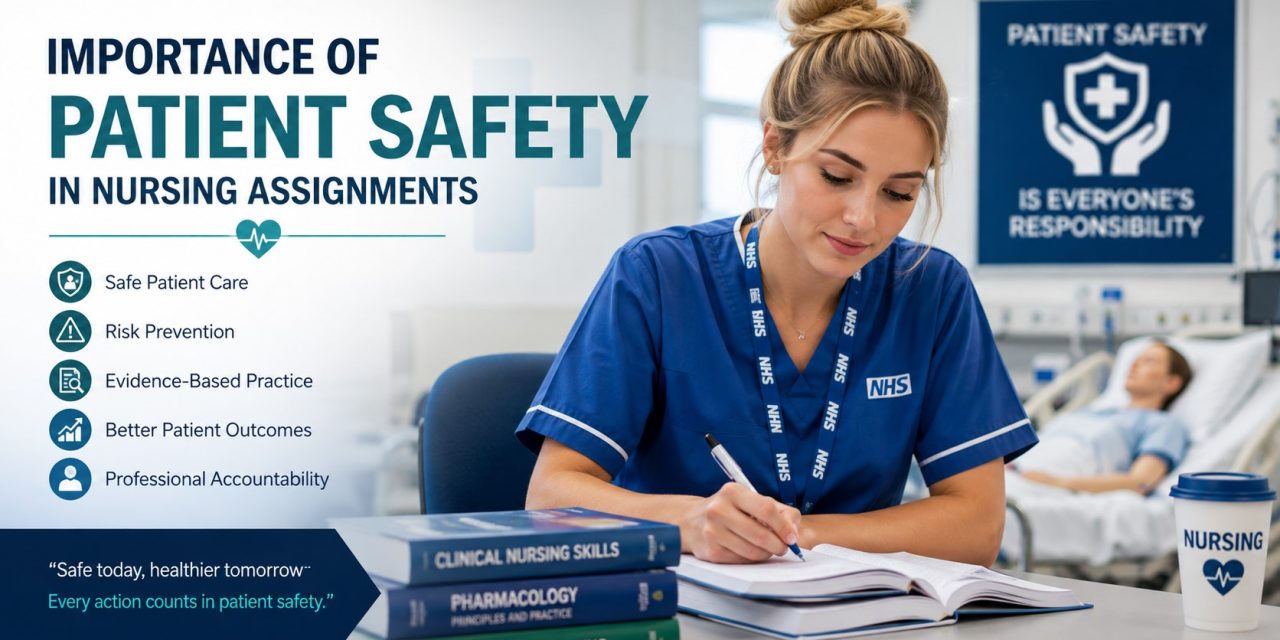
Patient safety is a substantial pillar in modern nursing practice and its related education. Addressing patient safety when designing specific nursing activities provides students with opportunities to apply taught concepts to the world of nursing practice.
As emitters of care day in day out, nurses administer drugs, check and record vital signs, observe and report sign changes, document, prevent cross-infections, and relay to and engage with allied health employees. Each of these nursing jobs impacts patient safety.
Thus, nursing activities should center on patient safety. They need to name and address common safety threats and hazards, safe practices, and the means of avoiding harm to patients.
Why Is Patient Safety Important in Nursing?
Patient safety means preventing harm to patients during care. This includes avoiding mistakes, injuries, infections, and other preventable problems.
Nurses play a major role in safety because they spend a lot of time with patients. This helps them notice problems early.
Patient safety is also about responsibility. Nurses must follow rules, guidelines, and ethical standards. They must always provide safe and respectful care.
Preventing Medical and Nursing Errors
Errors are possible in many areas across nursing and can range from administering medications, documenting, communication, transfer of care, and the performing of procedures.
Errors can occur through the absence of communication, the incompletion of steps, or lapses in care.
Thinking before acting, confirming information and steps, and adherence to established safety procedures are some corrective measures that can be taken by nurses to avoid mistakes.
The emphasis of patient safety in nursing is realized by students when they understand that a tiny mistake in nursing can be extremely risky for a patient’s life.
What Are the Main Patient Safety Risks in Nursing?
There are several common risks in healthcare. These include:
- Medication errors
- Patient falls
- Infections
- Pressure injuries
- Poor communication
- Wrong patient identification
- Delayed treatment
Nurses must recognise these risks early. They must also act quickly to prevent harm.
Medication Errors and Medication Safety
In nursing, medication safety is vital. Nursing staff must check all of the following: patient, name of the medication, dose, time of administration, route, and potential allergies for every medication administration. Nursing staff must also monitor patients for adverse effects or changes following the administration of medication.
These steps minimize the chance of causing avoidable patient harm and nasue the desired patient outcome.
Falls, Infections and Pressure Injuries
Patients who are older, weak, or dizzy feel the effects of falling more.
There are multiple methods for nurses to decrease the risk of falling. These include assessing the risk level, removing fall hazards, assisting the patient to move, and educating the patient.
The spread of infections within the hospital will be less likely to occur if nurses wash their hands, use personal protective equipment, and maintain some level of hygiene.
Pressure injuries are less likely to occur if a patient is moved frequently, the skin is assessed and supportive measures offered to assist the patient’s mobility.
How Do Nurses Improve Patient Safety?
Nurses improve safety in many ways. They assess patients, monitor changes, give treatment, and communicate with the healthcare team.
Knowing the role patient safety has on nursing assignments helps students to see how this safety helps to improve care to patients.
Patient Assessment and Early Detection
When nursing care is given, patient assessment is the first step. This step involves a nurse assessing the patient’s vital signs, symptoms, and history. This can be done while observing the patient. Nurses are able to detect changes in their patients before they worsen.
By acting fast when changes in the patient’s condition occur, recovery can occur much faster and even prevent developments of complications.
Communication and Clinical Handover
Good communication is very important in nursing. Poor communication can lead to mistakes.
During handover, nurses must share clear and correct information about the patient.
Good documentation also helps other staff understand the patient’s condition.
Teamwork between healthcare workers improves safety and care quality.
Patient Safety in Nursing Education
The study of patient safety is a large part of nursing. Assignments are a way for students to learn about cases that occur in the clinical setting.
The examples used may be:
Errors regarding the administration of medications
Control over infection/prevention
Patient falls
Communication problems
Risk management
Critical thinking skills is where the focus around patient safety within nursing assignments lies.
Evidence-Based Practice and Clinical Guidelines
Evidence-Based Practice refers to how care is given. It pertains to the inclusion of research in the methods utilized.
Term papers allow the research of guidance for care to be supported.
One example of this is hand hygiene. It is evidence based and decreases the chance of an infection.
Building a Strong Patient Safety Culture
The safety culture of an organization means that employees work towards the goal of avoiding the introduction of new safety concerns.
It is important to review each incident no matter what kind of feedback is provided.
Professional and Ethical Responsibility
Duty to the profession also means that a person should only do things they are trained to do.
It is also about the care that is provided to the patient and ensuring his privacy and dignity is maintained and that he rightfully participates in decisions made regarding his care.
Without this communication, no safety can be guaranteed.
Why Patient Safety Matters for Future Nurses
Patient safety is very important for nursing students because it prepares them for real clinical work.
It helps students develop skills such as:
- Critical thinking
- Communication
- Risk awareness
- Safe decision-making
The importance of patient safety in nursing assignments is that it connects learning with real-life nursing practice.
Developing Patient Safety Knowledge Through Nursing Assignments
Nursing students can use case studies, reflective essays, a research paper, and a care plan to understand patient care and potential risks in clinical practice. Different type of assignment tasks help students understand how a healthcare professional can improve patient outcomes across public health and the wider field of nursing. High quality academic writing also requires the correct referencing style and evidence from reliable sources. Good nursing assignment writing services can provide nice guidance on structure and research, helping students develop knowledge that supports their long term learning and professional practice.
Conclusion
Safety is critical in nursing care. It is present through every step of the process, from assessment to completion of care.
Increasing safety through nursing practice includes adherence to guidelines, thorough and systematic patient assessments, and timely intervention when a patient is deteriorating. A major aspect of preventing errors in clinical care is the teaching of patient safety to prospective nurses. Student nurses learn about the basic principles of safety and the importance of and the ability to limit errors within the clinical setting.
Frequently Asked Questions (FAQs)
Q1. What is patient safety in nursing?
The safety of the patient involves the avoidance of any risks that may cause harm to the patient in the process of either administering the healthcare or when the patient is receiving the healthcare. Safety in the use of medicine, control of healthcare associated infections, prevention of falls and effective communication are some of the aspects of patient safety.
Q2. Why is patient safety relevant to nursing students?
It is important that nurses comprehend the clinical risks to be able to identify and manage the safety of the patient, as well as practice safety themselves.
Q3. What are the common safety risks?
The common safety risks are falls, medication errors, infections, pressure injuries (or ulceration), communication breakdowns, etc.
Q4. What initiatives do nurses take to improve patient safety?
Nurses conduct patient assessments, provide safe nursing interventions, observe the effects of the nursing intervention, voice concern, and provide relevant information to the other members of the health team.
Q5. Why are nursing assignments valuable to patient safety?
Various real-life cases are presented to students through nursing assignments to enable them to recognize the risks, and practice nursing interventions safely.


