
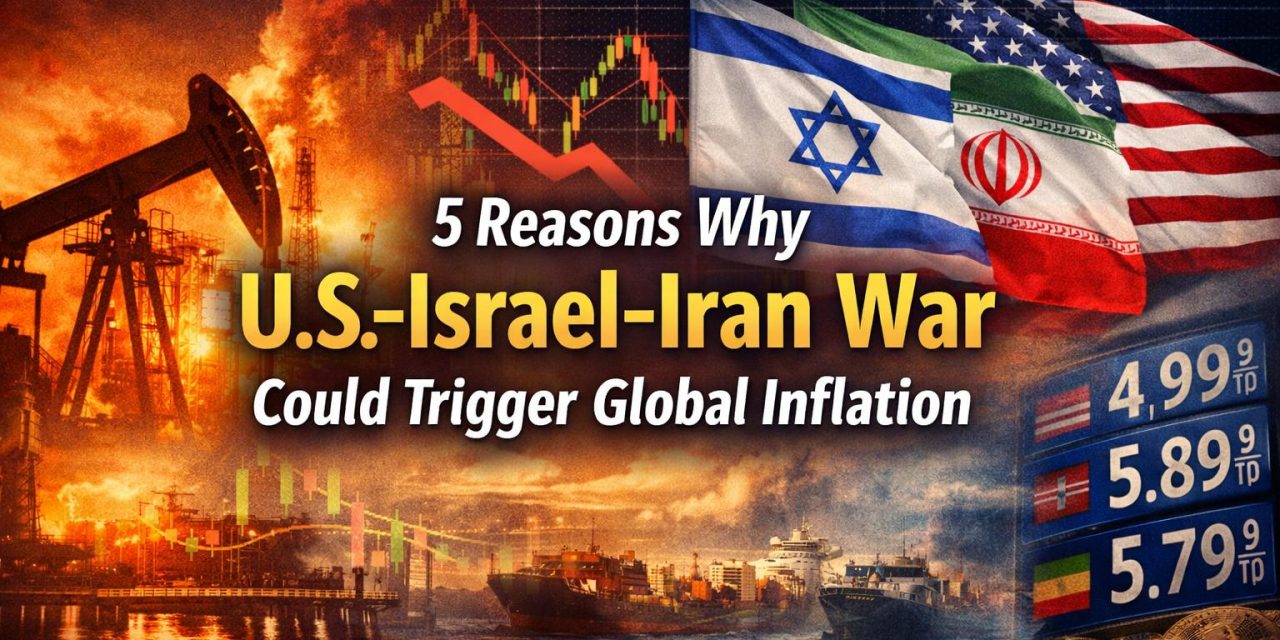
A wider conflict involving the United States, Israel, and Iran would not stay limited to the Middle East. It would spread through energy, shipping, trade, finance, and consumer markets very quickly. That is why U.S.-Israel-Iran war inflation is a serious global concern. When a war affects oil supply, shipping routes, and market confidence at the same time, the result is often higher inflation across many countries. This is not only about one region facing pressure. It is about how a major geopolitical conflict can increase fuel bills, transport costs, food prices, factory expenses, and household spending around the world.
The economic impact of Middle East war is strong because the region is deeply connected to global oil flows and trade routes. If the iran war risk becomes real, countries across Europe, Asia, Africa, and the Americas could feel the shock. A disruption in the strait of hormuz would affect global oil movement. A rise in oil prices would push up transport and production costs. Higher energy expenses would then spread into other sectors. Central banks, including the federal reserve, could face pressure to raise interest rates, even if that hurts economic growth. These are the main reasons the Middle East conflict global inflation link matters worldwide.
1. Oil Prices Would Rise First
Energy markets react immediately
The first and most direct effect of war would be an oil market shock. In times of conflict, traders react fast to military action, sanctions, and shipping threats. They do not wait for a full supply shortage to appear. They respond to risk first. That is why a war can create a crude oil price surge within hours.
This matters because oil is central to the world economy. Trucks, ships, airlines, factories, farms, and power systems all depend on it. When oil becomes more expensive, companies face higher operating costs. Those costs are usually passed to consumers through higher prices. This is one of the clearest war-driven inflation causes.
The Strait of Hormuz is critical
The strait of hormuz is one of the most sensitive energy routes in the world. A large share of global crude shipments passes through it. If war damages ports, slows tanker movement, or raises security fears, the market would react sharply. Even a small disruption can trigger panic buying, route changes, and higher insurance costs.
That is why a Strait of Hormuz disruption is often linked to oil price shock inflation. Once transport becomes risky, the cost of moving fuel rises. This pressure then affects gas prices, aviation fuel, shipping costs, and industrial production. It is a clear example of how war increases inflation globally.
Why oil prices rise during conflict
Why oil prices rise during conflict is simple. Supply looks less secure, buyers rush to protect future deliveries, and investors start pricing in shortages. This can happen even before physical damage becomes severe. In a crisis like this, natural gas markets may also react, especially if regional energy infrastructure is threatened. The result is broad energy crisis inflation impact across several sectors, not just gasoline.
2. Supply Chains Would Face New Disruption
Trade routes would become unstable
Modern trade depends on safe and predictable shipping lanes. War changes that quickly. Ships may reroute, delay loading, or avoid risky areas. Ports may face congestion. Security and insurance charges may rise. All of this creates a global supply chain disruption war effect.
When trade routes become unstable, companies do not get raw materials and finished goods on time. This delays production and increases costs. Businesses then pass those costs to buyers. That process adds inflation across many categories, from electronics to food to medicine.
Costs rise beyond oil
A conflict in the Middle East would not only affect fuel. It would also affect packaging, chemicals, machinery parts, and imported consumer goods. When freight becomes more expensive, final product prices rise too. This is how supply chain bottlenecks push inflation into daily life.
Countries that depend on imports are especially exposed. They face higher import cost inflation because they rely on stable international shipping. When the system becomes less efficient, shortages appear, and higher prices follow. This is one reason geopolitical inflation risks are now taken more seriously by economists and policymakers.
How conflict disrupts global trade
How conflict disrupts global trade can be understood in simple terms. War increases uncertainty, and uncertainty slows commerce. Banks become careful with trade finance. Shipping firms adjust routes. Buyers try to stockpile goods. Sellers hold inventory longer. Each of these decisions makes trade slower and more expensive. That weakens supply chains and feeds inflation.
3. Energy Costs Would Spread Across the Economy
Energy affects nearly every product
The energy crisis inflation impact is so strong because energy sits behind almost every price in the economy. Factories need fuel and electricity. Farmers need diesel and fertilizer. Food suppliers need cold storage and transport. Retailers need logistics networks. When energy becomes more expensive, many sectors raise prices together.
This creates a wider inflation wave. It starts with energy, but it does not stop there. It moves into food, transport, construction, plastics, and consumer goods. That is why energy supply constraints are such a serious source of higher inflation.
Commodity prices would also move higher
A major conflict could create commodity price spikes across several markets. Oil may rise first, but metals, fertilizers, grain inputs, and natural gas can also become more expensive. Once that happens, companies across industries face a cost squeeze. This is what causes cost-push inflation in war periods.
In a prolonged crisis, headline inflation could rise by several percentage points in some economies. That depends on how long the conflict lasts, how severely energy routes are disrupted, and how quickly alternative supply appears. If the war began to affect more than one export route, the inflation effect could be much larger.
Households would feel the pressure
Consumers usually feel the impact through fuel, food, electricity, and transport. A conflict that pushes up oil and gas markets can raise commuting costs, utility bills, and grocery prices. That makes the economic impact of Middle East war visible in daily life. For families, the issue is not only global politics. It is the cost of living.
4. Markets and Central Banks Would Add More Pressure
Investors react before inflation peaks
Financial markets are forward-looking. Investors react to what they expect, not only to what has already happened. If they believe war will reduce supply and increase risk, they shift money quickly. They may buy safe assets, exit vulnerable markets, or demand higher returns. This can worsen currency weakness and increase borrowing costs.
Why investors fear war-driven inflation is simple. They worry that energy shocks may last longer than expected. A short oil spike is one thing. A long conflict with sanctions and shipping disruption is much harder to manage.
Currency weakness can make inflation worse
Many economies import fuel, food, and manufactured goods. If their currencies weaken during a crisis, those imports become even more expensive. This creates another inflation channel on top of rising world prices. That is how geopolitical tension affects CPI even in countries far from the conflict zone.
This problem is more serious in emerging markets. They often face both import cost inflation and capital outflows at the same time. That combination can weaken currencies and make inflation harder to control.
Central banks face a difficult choice
The central bank interest rate response becomes very important in this situation. If inflation rises quickly, policymakers may decide to raise interest rates. The federal reserve would be watched closely because its decisions affect global markets, the dollar, and borrowing costs worldwide.
But higher rates also slow demand and reduce economic growth. This creates a difficult policy balance. Central banks may need to fight inflation without pushing the economy into a sharp slowdown. Many analysts, and almost every chief economist, would focus on whether price pressures are temporary or likely to stay for months.
5. Sanctions and Retaliation Could Deepen the Shock
Sanctions can reduce supply further
International sanctions impact prices by making trade, finance, and transport more difficult. If sanctions on Iran become stricter, Iran oil exports could fall more. That would reduce available supply in world markets and add to oil price shock inflation.
How sanctions increase global prices is direct. When supply becomes harder to access, buyers compete for fewer resources. This raises costs for oil, fuel, shipping, and related industries. These pressures can last longer than the initial military event.
OPEC may not solve the problem fast enough
OPEC production levels would receive close attention in a crisis. Some producers may try to raise output, but replacement supply is not always immediate. Shipping limits, refining needs, and political concerns can delay the response. If markets believe lost barrels will not be replaced quickly, prices can stay elevated for longer.
That is one reason U.S.-Israel-Iran war inflation could become a lasting issue instead of a short-lived spike. If global energy markets volatility stays high, businesses and consumers may keep facing rising costs for an extended period.
Retaliation can spread beyond energy
The conflict could also affect ports, shipping systems, insurance markets, and trade confidence. Businesses may hold extra inventory, switch to more expensive suppliers, or delay expansion plans. Those decisions raise costs and reduce efficiency. This is how conflict disrupts global trade beyond oil alone.
Conclusion
A major conflict involving the United States, Israel, and Iran could trigger inflation through several connected channels. Oil would likely rise first. Shipping and insurance costs would follow. Energy costs would spread into food, manufacturing, and transport. Markets would react fast, currencies could weaken, and central banks might respond with tighter policy. Sanctions and retaliation could make the shock deeper and longer.
That is why U.S.-Israel-Iran war inflation matters worldwide. It is not only a story about politics or security. It is about how war can disrupt oil supply, damage trade routes, lift oil prices, raise gas prices, weaken confidence, and create higher prices across the global economy. In simple terms, when conflict hits a key energy region, inflation can rise far beyond the battlefield.
Frequently Asked Questions (FAQs)
What is U.S.-Israel-Iran war inflation?
U.S.-Israel-Iran war inflation refers to the global rise in prices caused by a large-scale conflict involving these countries. It happens when war disrupts oil supply, trade routes, and financial markets, leading to higher costs for energy, goods, and services worldwide.
How does war in the Middle East increase global inflation?
War in the Middle East increases inflation by disrupting oil production, damaging shipping routes, and creating supply shortages. These factors raise transportation and production costs, which businesses pass on to consumers, causing a global CPI increase.
Why do oil prices rise during geopolitical conflicts?
Oil prices rise during conflict because supply becomes uncertain. Traders expect shortages due to damaged infrastructure, sanctions, or blocked shipping lanes like the Strait of Hormuz. This leads to higher demand pressure and rapid price increases.
How do supply chain disruptions during war affect prices?
Global supply chain disruption war effects cause delays, higher shipping costs, and shortages of goods. When products take longer to arrive or become scarce, businesses increase prices, resulting in inflation across multiple sectors.
Can central banks control war-driven inflation?
Central banks can respond by raising interest rates to reduce inflation. However, this approach can slow economic growth. During war-driven inflation, controlling prices becomes difficult because the root cause is supply disruption, not just demand.

